Around World Down Syndrome Day (March 21), many conversations focus on child inclusion and development. It’s also a good time to remember that a baby’s growth is not just measured in visible milestones like crawling or saying their first words.
There is another dimension of development that is often more overlooked: the capacity for social connection.
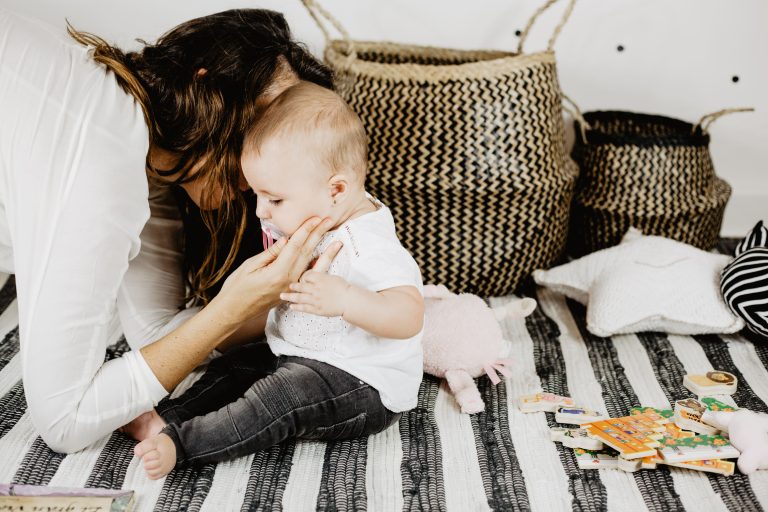
During the first year of life, babies begin to build the foundation for how they will interact with others, interpret emotions, and learn from their surroundings. These early signals – looks, gestures, or vocalizations – are part of what we might call the silent language of development.
Observing them does not mean looking for problems, but rather understanding better how each child begins to relate to the world.
The silent language of babies
When we think about child development, we usually celebrate physical or linguistic achievements: sitting down, walking, saying “mom”.
However, before all that happens something fundamental: the baby learns to interact.
From a very early age, babies begin to:
- Recognize familiar faces
- Responding to emotional expressions
- Find eye contact
- Sharing care with others
These skills form the basis of future skills such as language, empathy or cooperation.
Three key social milestones in the first year
Over the first 12 months, there are usually signs that the baby is developing social interaction skills.
1. The social smile (around 2 months)
The social smile is not just a reflex gesture. It appears when the baby recognizes an adult’s face and responds intentionally.
It’s one of the first moments when the baby seems to say, “I see you and react to you.”
2. Visual monitoring and shared care (6-9 months)
From this stage, babies begin to look at what others look at.
If an adult points at an object or looks at something, the baby tries to follow that visual direction. This phenomenon is known as shared attention and is key to social learning and language development.
3. Babbling with intent (9-12 months)
Towards the end of the first year, many babies begin to establish vocal exchanges with adults.
You can:
- Make sounds while looking at another person
- Waiting for a response
- Respond to the interaction
This process is known as proto-conversation and represents a pre-language stage.
When should we look more closely?
Each baby follows its own pace of development. A one-off delay in a milestone is usually not cause for alarm.
However, some professionals recommend paying attention to early social signals when they are persistent, such as:
- Little eye contact during interaction
- Lack of response to the name around 9-10 months
- Absence of simple communicative gestures like pointing or saying goodbye around the first year
In some cases, persistent difficulties in these areas may be related to differences in neurodevelopment, such as Autism Spectrum Disorder (ASD). That is why many specialists carefully observe these signs during the first months of life.
Identifying early signals is not about labeling, but about opening up opportunities for support when they can have the greatest impact.
Small observation games at home
Parents and caregivers know their children best. Many signs of development can be seen during daily activities.
- Cuckoo-after – Watch if the baby is actively looking for your face. A positive sign: anticipate the encounter with joy.
- Simple imitation – Notice if he tries to copy gestures or sounds. Positive sign: observe closely and try to repeat.
- Social reference – Observe if he looks at the adult before something new. Positive sign: look for the reaction of the adult.
These simple moments can offer valuable clues about how the baby is building their relationship with the environment.
Identifying early signals as an opportunity
Observing these signs does not mean looking for problems where there are none. It means accompanying development with attention and sensitivity.
In some cases, these observations may help to identify earlier needs related to ASD or other developmental differences, facilitating early access to career guidance.
At BlueRoute.ai, we work to provide technology tools that help families better understand child development and access early guidance when they need it.
Because identifying warning signs before does not mean labeling: it means better accompanying the growth of each child.