You spend weeks, sometimes months, watching your baby at home. You notice that they don’t look at you in the same way as before, that they don’t respond when you call their name, or that they struggle to copy your gestures. With your heart in your mouth, you finally manage to get an appointment with a specialist.
You arrive at the clinic. There are fluorescent lights, white coats, unfamiliar toys and a completely strange environment. Your child, overwhelmed by the situation, reacts in one of two ways: either they burst into inconsolable tears, or they become completely withdrawn.
Twenty or thirty minutes pass, the consultation ends, and you leave with the feeling that the specialist hasn’t seen the real child. You’re left with the distressing thought: “They don’t behave like this at home.”
If this has happened to you, the first thing you need to know is that it is not your fault, nor the doctor’s, nor your child’s. It is what is known as the ‘consultation effect’. A snapshot in an artificial setting rarely reflects a baby’s real behaviour, and that is one of the reasons why the early detection of autism is sometimes delayed.
The ‘consultation effect’ in child development assessment
When we assess an adult, we can ask them to explain what is wrong. With a baby aged 6, 12 or 18 months, the only tool available is observation of their behaviour. The problem is that babies are extremely sensitive to changes in their environment.
In a clinical setting, a child may:
- Freeze up due to stress: stop doing things that they do naturally at home (such as pointing or smiling).
- Become hyperactive: appear much more restless or distracted due to overstimulation in a new place.
A traditional medical consultation is necessary for physical and neurological examination, but it is insufficient for picking up on the subtle early signs of autism. To understand how your child communicates, plays and interacts, we need to look at them through a different lens: their natural environment.
Why the natural environment is the real ‘treasure map’
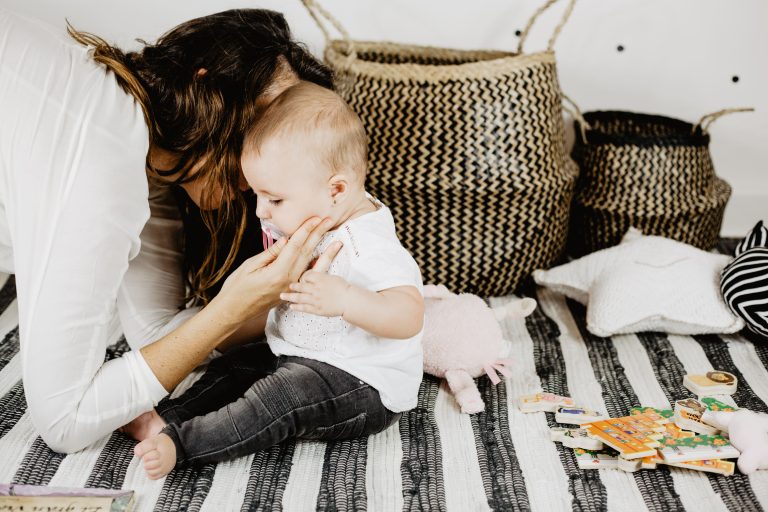
Your baby’s social development doesn’t happen in a doctor’s surgery; it happens in your living room, on the playmat, at mealtimes or whilst you’re changing their nappy.
Observing the child in their daily life offers three invaluable advantages for professionals:
-
Genuine spontaneity
At home, surrounded by their toys and with their attachment figures (mum, dad, carers), the baby feels safe. Only when a child feels safe do they display their full range of behaviours, communication and play.
-
Context and frequency
To assess warning signs (such as a baby not responding to their name or not imitating gestures), specialists need to understand the context. It is one thing for a child not to respond to their name because they are deeply engrossed in a toy, but quite another if they never do so in any everyday situation. Day-to-day life allows us to gauge that frequency.
-
Bringing together two essential perspectives
As parents, you have the day-to-day insights, but you lack the clinical expertise. Professionals have the clinical expertise, but they lack your day-to-day perspective. The natural environment is the meeting point where these two elements fit together perfectly, and it is the cornerstone of Blue Route.
How to use home videos as an early detection tool

These days, you carry the most powerful diagnostic tool there is in your pocket: your mobile phone. Recording small moments from your child’s daily routine can completely change the course of a child development assessment.
If you’re concerned about your child’s development and want to gather useful information for the paediatrician or specialist, follow these tips when recording:
- Focus on interaction, not just the child: it is just as important to record what the baby is doing as what the adult is doing. If you are checking whether they point with their finger or avoid eye contact, record the moment when you try to get their attention.
- Record short, natural clips: you don’t need half-hour-long videos. One- or two-minute snippets of everyday situations (eating, playing on the floor, having a bath) are more than enough.
- Don’t force the situation: don’t ask them to ‘act’ or do things for the camera. What the specialist needs to see is how they behave in the flow of everyday life.
A new approach to family support
At Blue Route, we were founded on a clear conviction: the walls of a consultation room should not limit your child’s future. We believe that the combination of developmental science, clinical insight and digital technology is the key to offering genuine support, without agonising waits and from the comfort of your own home.
Observing day-to-day life allows us to chart a personalised path and understand your child’s development in its fullest form: being themselves, in their own environment. If you’d like to stay up to date with how we’re driving this change in the sector, we invite you to follow us on LinkedIn.